What Is the Difference Between a Chimney Cap & a Chimney Crown?
Chimney Cap vs Chimney Crown: Key Differences Explained
A chimney cap and a chimney crown are two separate components that protect different parts of your chimney system. Knowing which is which helps homeowners make better decisions when something goes wrong.
What Is a Chimney Cap?
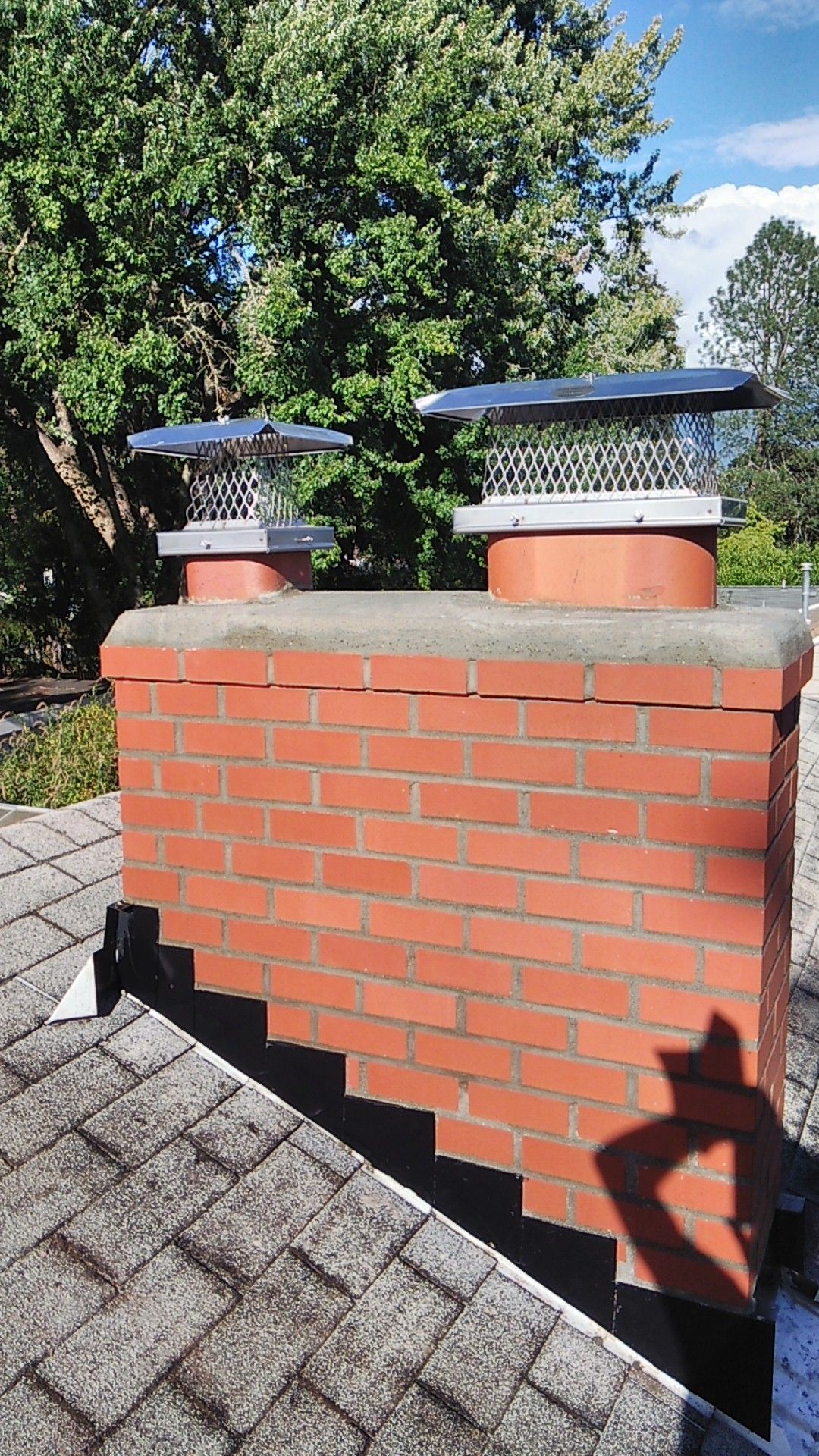
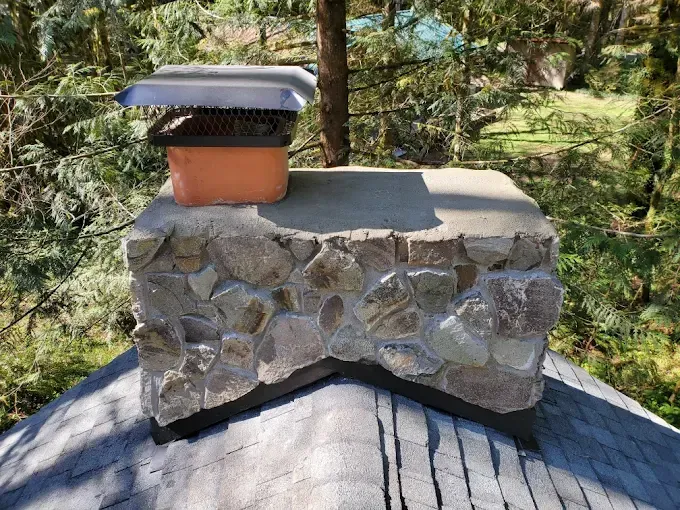
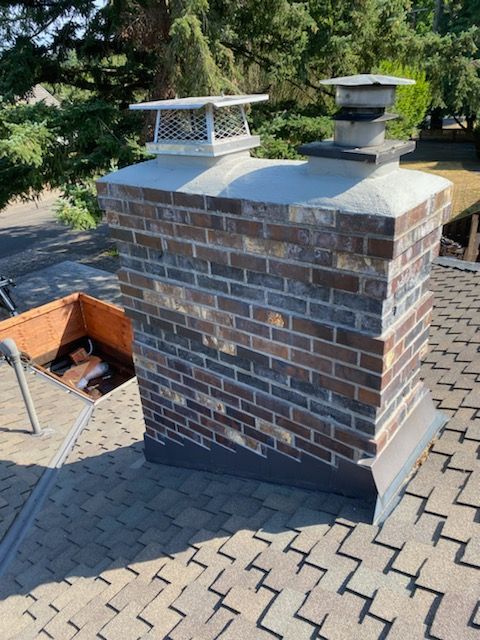
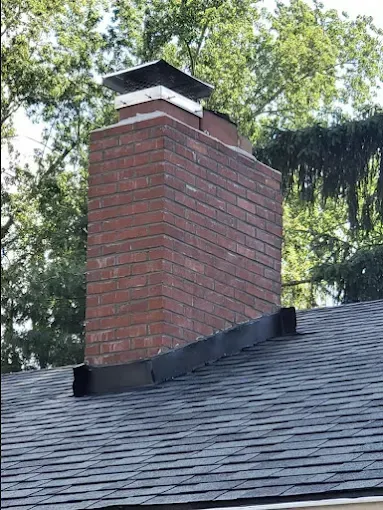
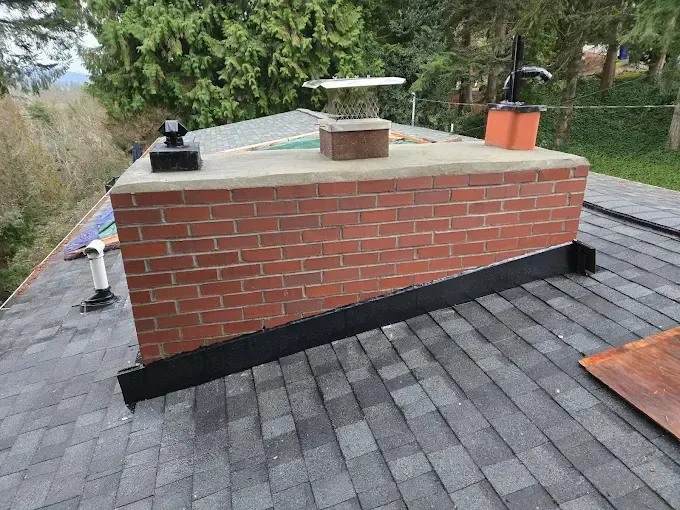
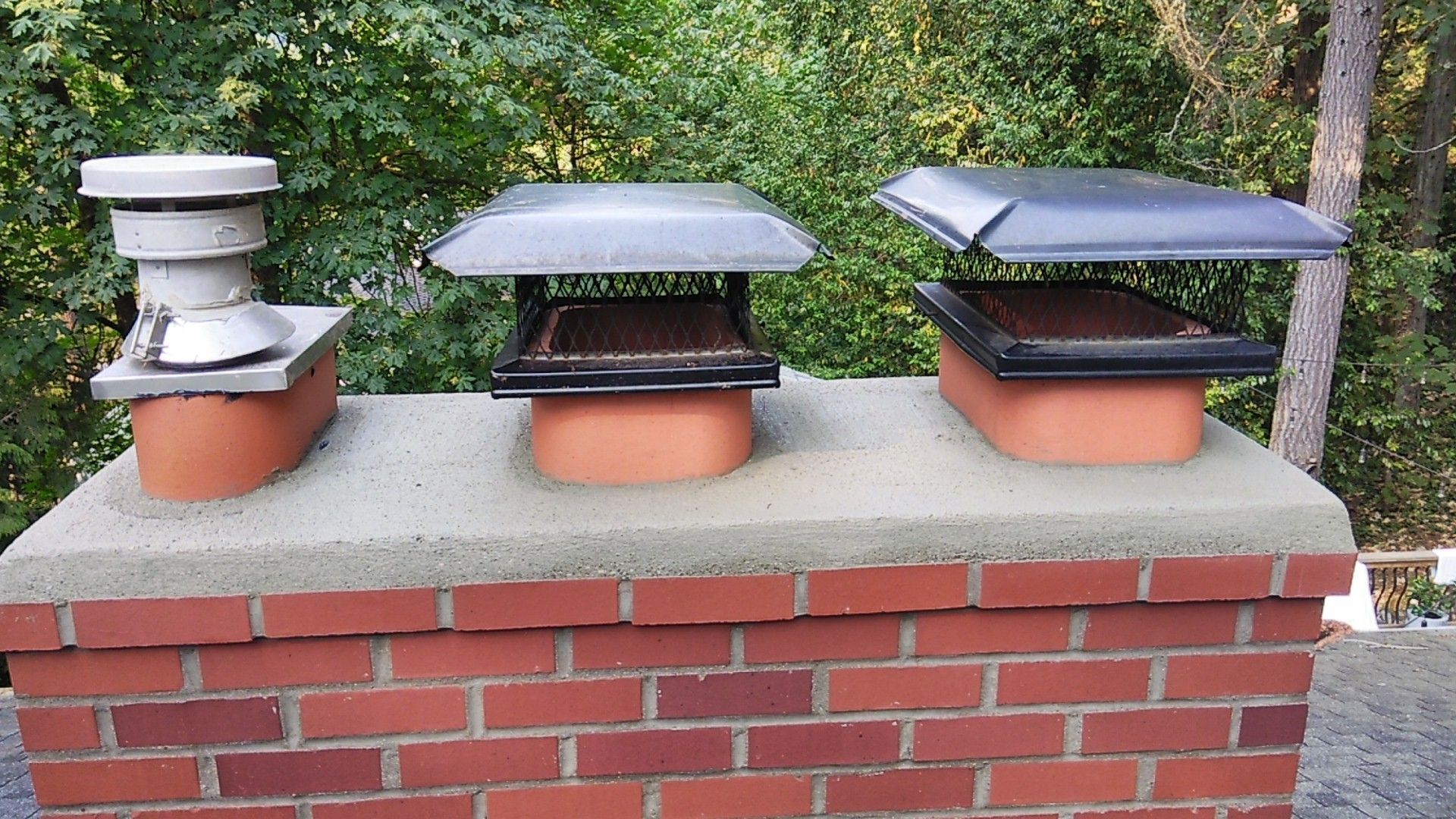
A chimney cap is a metal cover that fits directly over the top of the flue opening. It is the visible component sitting at the very top of the chimney, and its job is to block the opening without restricting airflow.
A properly installed chimney cap keeps rain from falling directly into the flue, which protects the liner and interior masonry from water damage over time. It also prevents birds, squirrels, and other animals from nesting inside the flue, blocks wind-driven downdrafts that push smoke back into the home, and stops sparks from escaping the flue and landing on the roof or nearby vegetation.
Caps are made from various materials, including galvanized steel, stainless steel, and copper. Stainless steel and copper caps hold up significantly longer in the Pacific Northwest, where exposure to moisture and rain is constant throughout most of the year.
What Is a Chimney Crown?
A chimney crown is the concrete or mortar slab that covers the top of the chimney structure itself. It sits below the cap and surrounds the flue opening, sloping outward so water drains away from the masonry rather than pooling on top of it.
The crown is the chimney’s primary defense against water intrusion at the roofline. When it develops cracks, which happens gradually through freeze-thaw cycles and prolonged moisture exposure, water gets into the masonry and begins breaking it down from the inside. Left unaddressed, crown damage leads to spalling bricks, deteriorating mortar joints, and eventually structural failure of the chimney itself.
In the Portland and Lake Oswego area, the wet climate puts chimney crowns under constant stress. A crown that might last many years in a drier climate can develop cracks in a fraction of that time here due to the persistent moisture and winter freeze cycles common throughout the region.
How a Chimney Cap & Crown Work Together
These two components protect different areas but work as a system. The crown covers the top of the masonry and redirects water away from the structure. The cap covers the flue opening and prevents water, animals, and debris from entering the interior.
If one is missing or damaged, the other cannot fully compensate. A chimney with a cap but a cracked crown will still allow water to penetrate the masonry. A chimney with a solid crown but no cap leaves the flue opening exposed to rain, animals, and downdrafts. Both need to be in good condition for the chimney system to stay protected.
Signs Your Cap or Crown Needs Attention
Portland area homeowners should watch for a few common indicators that one or both components need service:
For the chimney cap: a visible missing or damaged cap, animal activity in the fireplace, downdraft issues causing smoke to enter the home, or debris falling into the firebox.
For the chimney crown: white staining on the exterior bricks, cracks visible at the top of the chimney, water appearing in the firebox after rain, or spalling or chipping bricks near the roofline. In Lake Oswego and throughout the greater Portland area, these signs tend to appear earlier than in drier climates due to the sustained moisture exposure.
Chimney Cap & Crown Services in Lake Oswego & the Greater Portland Area
Alliance Chimney & Masonry provides chimney cap installation,
cap replacement,
crown repair, and crown rebuilding throughout the Portland Metro area. Every job starts with a thorough inspection to assess what is actually needed before any work is recommended. Our team serves homeowners across
Lake Oswego,
Portland,
Beaverton, and
Gresham, and all work is backed by a 5-year guarantee.
If you have noticed any of the warning signs above or simply have not had your chimney cap or crown inspected recently, contact Alliance Chimney & Masonry today for a free estimate.